Commercial Solar PV & Battery Storage
103kWp Solar PV System with 241kWh Battery Storage
Overview:
This commercial renewable energy project involved the design and installation of a 103kWp solar PV system combined with a 241kWh battery energy storage system.
The system was specifically designed around the client’s existing electricity consumption, with the objective of significantly reducing reliance on grid electricity, lowering annual energy costs and supporting the company’s commitment to reducing its carbon footprint.
The site already benefits from a ground source heat pump system, which provides the building’s heating requirements. By introducing a substantial solar PV and battery storage
installation alongside the existing renewable heating technology, the company has taken another major step towards reducing its dependence on conventional energy sources.
The completed system is expected to meet approximately 95% of the property’s electricity demand.

The Client’s Objectives:
The client’s primary motivation for investing in solar PV was to combat the site’s significant electricity consumption while making a long-term commitment to reducing its environmental impact.
With the building’s heating demand already being met by a ground source heat pump system, electricity represents a particularly important part of the site’s overall energy requirements.
Rather than simply installing a solar PV array, the system was designed around how and when the company consumes electricity.
A key consideration was the site’s night-time electricity demand. Solar PV naturally generates during daylight hours, so a substantial battery storage system was incorporated into the design. This allows surplus solar energy to be stored and used when generation falls, helping the site maximise the amount of renewable electricity it consumes directly.

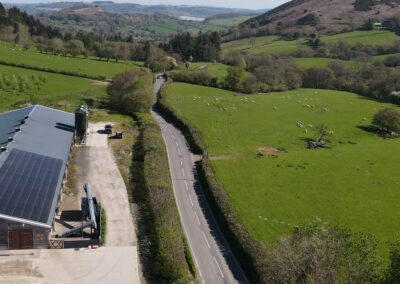
Initial Design:

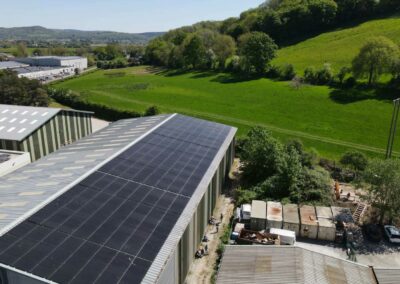
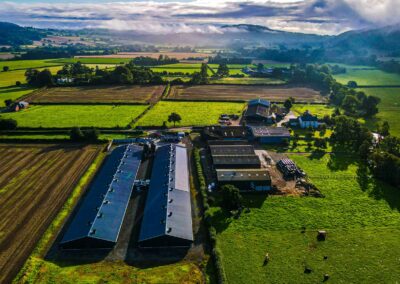
Completed Installation:

The Solution:
Following an assessment of the site’s electricity demand and consumption patterns, a 103kWp solar PV array was designed alongside a Vilion 241kWh battery storage system.
A total of 222 DMEGC 465W all-black solar panels were installed.
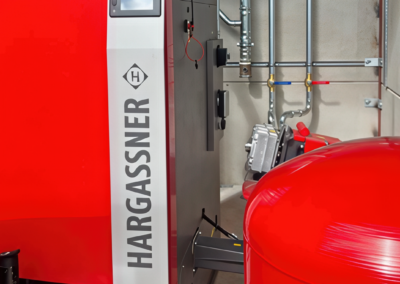
The battery storage system is a Vilion EnerArk 50kW/241kWh system, featuring its own inverter and integrated MPPT technology.
The system incorporates a 120kWp MPPT, providing the capacity required to connect the 103kWp solar PV installation.
Due to the construction and layout of the property, the solar array was installed using a specialist flat-roof mounting system designed and supplied by Sunfixings.
The combination of the large flat-roof solar array and substantial battery capacity makes this installation particularly effective. Solar generation can be utilised throughout the day while excess energy can be stored for use outside peak generation periods, including overnight.
- System Specification:
- Solar PV capacity: 103kWp
- Solar panels: 222 × DMEGC 465W all-black modules
- Battery storage: Vilion EnerArk
- Battery capacity: 241kWh
- Battery inverter output: 50kW
- MPPT capacity: 120kWp
- Mounting system: Sunfixings flat-roof frame
- Installation period: Approximately two weeks
- Expected annual solar generation: 86,197kWh
- Estimated electricity demand covered: Approximately 95%

Designed Around Real Energy Consumption:
One of the most important aspects of this project was ensuring that the system was appropriately sized for the client’s actual energy requirements.
The solar PV array was designed around the company’s electricity demand and consumption, rather than simply maximising the number of panels that could physically be installed on the roof.
Battery storage was then incorporated specifically to address the site’s night-time consumption.
During periods of strong solar generation, electricity produced by the 222-panel array can be used directly by the building. Surplus generation can then be directed into the 241kWh battery system rather than being unnecessarily exported.
Stored electricity can subsequently be discharged when solar generation is insufficient, allowing a greater proportion of the site’s electricity requirements to be met using energy generated on site. This approach is expected to enable the combined system to meet approximately 95% of the property’s electricity demand, substantially improving the company’s energy independence.
Intelligent Energy Management:
Sizing the system correctly was the first step. Operating it intelligently every day is what delivers the long-term performance, and this is where Q Energy adds an AI-driven layer of ongoing optimisation.
Q Energy’s SmartQube IoT Hub monitors and controls the renewable assets in real time, while Q Energy’s AI forecasts electricity demand, solar generation and energy prices for each half-hour period.
Our AI charges the battery during lower-cost overnight periods and discharges when electricity is more expensive, reducing exposure to 4pm to 7pm peak charges and seasonal winter levies. 10% of bill from avoided charges could be reduced. Our AI also maximises the use of free solar energy generated on site. It determines the optimum battery charge level overnight, balancing the need for stored energy with enough spare capacity to capture excess solar during the following day. This expects to increase the solar self-consumption by 22%, reducing reliance on grid electricity.
As an Elexon-certified, licensed Asset Metering Virtual Lead Party (AMVLP), Q Energy can also use the battery to provide grid balancing and flexibility services, supporting the wider electricity system while creating an additional revenue stream for the client.
Beyond optimisation and savings, the client gains visibility through Q Energy’s Energy Management System, showing electricity taken from the grid and its cost, solar generated and consumed on site, and the status of every asset, with faults flagged early.

FinancialBenefits:
The financial impact of the completed installation is expected to be significant.
Based on the system’s projected performance and the client’s electricity consumption, the installation is expected to deliver annual energy cost savings of approximately:
£15,000 to £20,000 per year
The project has an anticipated payback period of approximately seven years.
Following the payback period, the system can continue generating and storing electricity for many years, providing the business with ongoing protection against energy costs while reducing the amount of electricity it needs to purchase from the grid.
The projected annual savings were one of the most rewarding aspects of the project, demonstrating the commercial benefits that can be achieved when renewable technologies are correctly designed around a business’s actual consumption.

Environmental Impact:
Alongside the financial benefits, the installation is expected to deliver a substantial reduction in the company’s environmental impact.
The projected benefits include:
- 22 tonnes of CO₂ emissions reduced annually
- Environmental impact equivalent to approximately 4,195 trees planted
- Equivalent to approximately 652,500km of car travel avoided
- Equivalent to approximately 467 long-haul flights avoided
Combined with the site’s existing ground source heat pump system, the solar PV and battery installation forms part of a wider approach to reducing the property’s dependence on conventional energy sources.


Installation:
Despite the scale of the project, the complete installation was delivered over a period of approximately two weeks.
This included the installation of the specialist flat-roof mounting system, all 222 solar modules, the associated electrical infrastructure and the Vilion battery energy storage system.
The completed installation demonstrates how substantial renewable energy infrastructure can be integrated into an existing commercial property while delivering both immediate and long-term benefits.


The Result:
This project demonstrates the potential of combining commercial solar PV with appropriately sized battery storage.
By designing the installation around the company’s actual electricity consumption, the completed system is expected to generate approximately 86,197kWh of
renewable electricity annually, meet around 95% of the site’s electricity demand and deliver estimated annual savings of between £15,000 and £20,000.
With an anticipated payback period of approximately seven years and projected annual carbon savings of 22 tonnes, the installation represents a significant long-
term investment in both the financial and environmental performance of the property.
Combined with the client’s existing ground source heat pump system, the project provides a strong example of how multiple renewable technologies can work together
to significantly reduce a commercial property’s reliance on conventional energy.

Contact Us to Discuss
Your Renewable Project